
Description
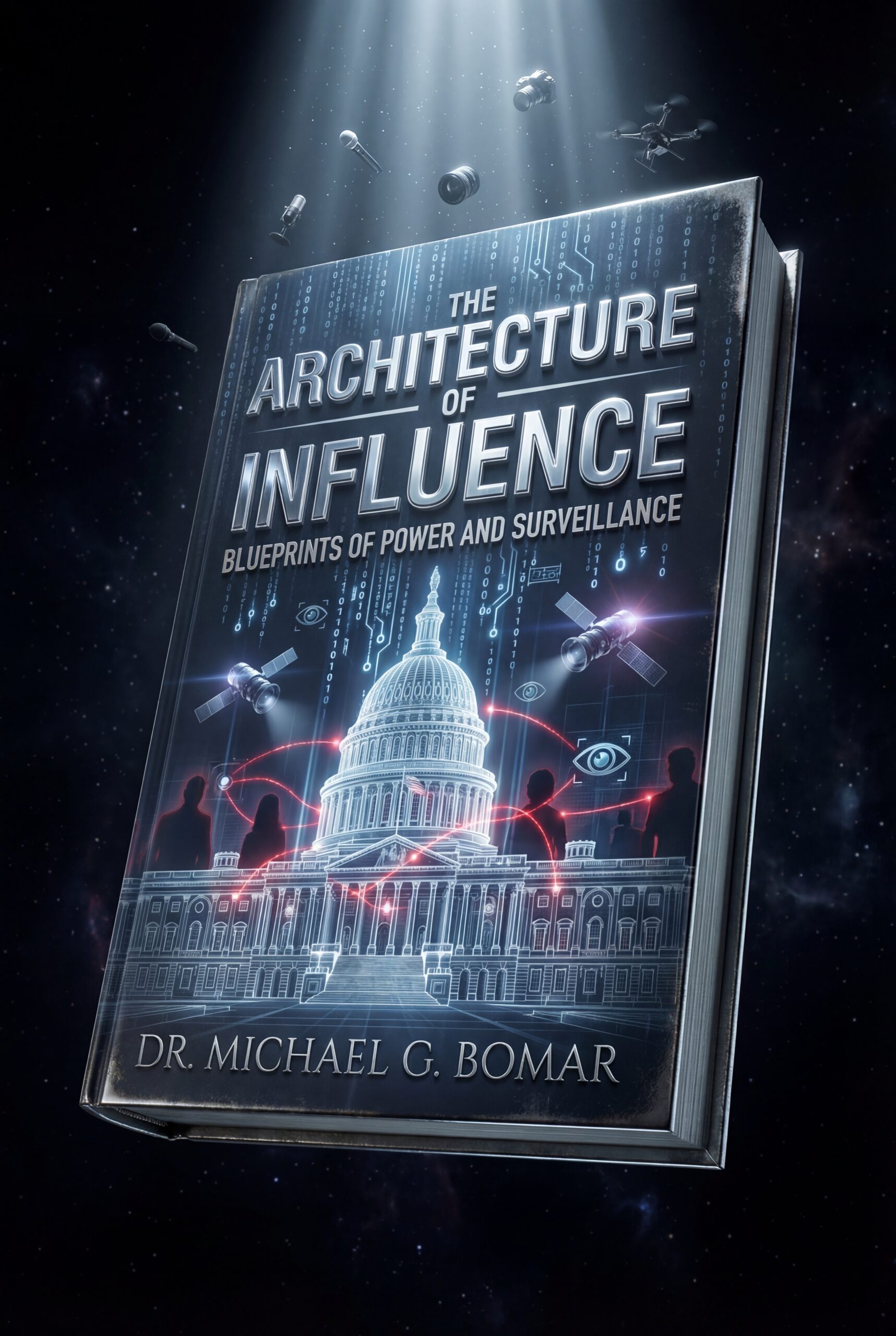
The Architecture of Influence: Power, Blackmail, and the Invisible Wars Behind Democracies
By Dr. Michael G. Bomar
What if the greatest threats to democracy don’t come from tanks and missiles—but from secrets, leverage, and the hidden manipulation of reality itself?
In the summer of 2023, a mysterious document appeared—forwarded through countless inboxes, printed from an AI chat session, bearing no official letterhead and no verifiable author. Its claims were explosive: that Western democracies rest upon a foundation of controlled influence, that allies spy on allies as routinely as they spy on enemies, that the powerful are systematically compromised through networks of blackmail and leverage, and that the public—the very citizens who believe themselves to be the authors of their own destiny—are in fact the audience for a play written by hands they never see.
The Architecture of Influence takes that document not as gospel, but as a starting point—an invitation to investigate the shadowy mechanisms that actually shape our world.
In this landmark work of investigative exploration, Dr. Michael G. Bomar reveals:
-
The long history of allies spying on allies—from the Great Seal listening device hidden in the U.S. ambassador’s Moscow office to the NSA’s surveillance of German Chancellor Angela Merkel. The gentlemen do read each other’s mail.
-
The evolution of the “soft coup” —how regime change has transformed from overt military intervention to covert influence operations in Iran, Chile, Ukraine, and beyond. Tanks are no longer required to overthrow governments.
-
The currency of secrets —from ancient Rome to Jeffrey Epstein, how compromising information has been collected, stored, and deployed as the ultimate tool of leverage. The kompromat file is not a myth; it is a method.
-
The machinery of compromise operations —the honey traps, financial nooses, and ideological appeals through which intelligence agencies recruit and control assets. The art of the operation, perfected over decades.
-
The networks of access and influence —how organizations like AIPAC, defense contractors, and the revolving door between government and industry create dependencies that shape policy without appearing to do so.
-
The circular flow of money —how foreign aid, defense contracts, and offshore finance create influence ecosystems that bind nations together even as they bind them down. From Egypt to Saudi Arabia to the military-industrial complex.
-
The concentration of ownership without ownership —how asset managers like BlackRock and Vanguard have accumulated unprecedented voting power, creating new centers of unaccountable influence.
-
The weaponization of finance —how sanctions, SWIFT exclusions, and financial warfare have become primary instruments of geopolitical strategy, from Iran to Russia.
-
The manufacture of reality —how media narratives, agenda-setting, and the attention economy shape what we believe to be true. The Nayirah testimony, the propaganda model, and the algorithms that optimize for outrage.
-
The uses of polarization —how division serves power, from the Southern Strategy to the culture war to Russian interference. A divided population cannot unite against those who rule it.
-
The psychology of mass distraction —how fear cycles, outrage cycles, and grief cycles keep populations emotionally managed and politically neutered. The dopamine economy and the capture of attention.
-
The deep bureaucracy —the permanent government of career officials, intelligence agencies, and military commands that endures while elected officials come and go.
-
Intelligence without borders —the Five Eyes alliance, the Israeli relationship, and the global liaison networks that operate outside democratic oversight.
-
The perpetual tension between security and liberty —from the Palmer Raids to COINTELPRO to the surveillance state revealed by Edward Snowden.
-
The psychology of conspiracy —why humans build hidden-power narratives, from the Kennedy assassination to QAnon, and how to distinguish legitimate suspicion from paranoid fantasy.
-
The making of the useful citizen —how fear, surveillance, and social pressure shape us into subjects who police ourselves, who desire what we are supposed to desire, who fear what we are supposed to fear.
-
And finally, the question that haunts our age —in a world where everything can be doubted, how do we know what is true?
Praise for The Architecture of Influence
“A stunning investigation into the hidden levers of power. Bomar writes with the precision of a scholar and the pacing of a thriller writer. This book will change how you see everything.”
“The most important book about power and influence in a generation. Read it before they try to ban it.”
“Bomar has done something remarkable: he has taken the paranoid style and subjected it to the discipline of evidence. The result is not a conspiracy theory but a conspiracy investigation—and the findings are terrifying.”




Reviews
There are no reviews yet.